Colour Is the Worst Way to Judge Olive Oil, With One Exception
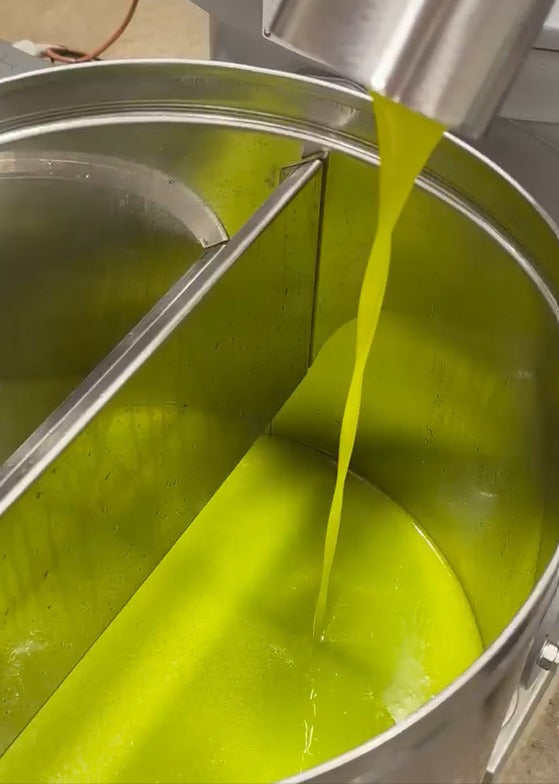
Colour tells you almost nothing about the quality of extra virgin olive oil. A genuinely excellent oil can be deep green or pale gold, and the difference usually comes down to the olive variety and when the fruit was picked rather than how good the oil is. This is not a minor technicality. It is written into the rules that govern the category: under the International Olive Council trade standard, colour is listed only as a descriptive note, "light yellow to green", and plays no part in deciding whether an oil is extra virgin. Acidity, peroxide value, ultraviolet absorbency and a trained tasting panel decide that.
There is one situation where colour becomes worth paying attention to, and it is not the one most people assume. That comes later in this guide.
What Actually Decides Whether an Oil Is Extra Virgin
The grade is set by measurable limits, not by appearance. Under the IOC trade standard, extra virgin olive oil must meet all of the following:
- Free acidity of no more than 0.80 grams per 100 grams, expressed as oleic acid.
- Peroxide value of no more than 20.0 milliequivalents of active oxygen per kilogram, which indicates how far oxidation has progressed.
- Ultraviolet absorbency within set limits, with K270 no higher than 0.22 and delta K no higher than 0.01. These readings expose refined oil blended into something sold as virgin.
- A sensory panel result with a median of defects of exactly 0.0 and a median fruity attribute above 0.0.
Not one of those is visual. An oil can look exactly the way a shopper expects premium oil to look and still fail every one of them.
One more detail from the same standard is worth knowing, because it quietly answers a question many buyers have. For virgin olive oils, food additives are listed as "none permitted". Properly produced extra virgin olive oil is olives and nothing else.
Why Professional Tasters Work From Blue Glasses
If colour mattered, the people whose job is to grade olive oil would look at it. They are specifically prevented from doing so.
The IOC publishes a dedicated specification for the tasting glass used in official panel assessments. It sets the capacity at 130 ml, the height at 60 mm, and the material as dark coloured glass, which in practice is cobalt blue. The document states the reason plainly: the glass is "made of dark-coloured glass to prevent the taster from perceiving the colour of the oil", which it describes as "eliminating any prejudices and impeding the possible formation of biases".
That is an unusually direct admission from a standards body. The industry that knows olive oil best has concluded that seeing the colour makes expert judgment worse, not better. The panel works from aroma and taste alone, scoring three positive attributes: fruity, bitter and pungent.

Where the Colour Comes From
Olive oil gets its colour from two groups of natural pigments carried over from the fruit. Chlorophylls produce green. Carotenoids produce yellow and gold. The balance between them is decided mainly by three things that have little to do with how carefully the oil was made.
The olive variety. Different cultivars simply produce differently coloured oil. An oil pressed from one variety can be markedly greener than an oil pressed from another on the same day, at the same mill, to the same standard.
How ripe the fruit was. Chlorophyll content falls as olives mature. Green, under ripe olives give greener, grassier oil. Riper olives, harvested later, give oil that leans gold. Fresh olive oil typically carries only around one to ten parts per million of chlorophyll, so small differences in picking date produce visible differences in the bottle.
What else went into the mill. Olives almost always arrive with some leaves attached, and leaves contribute chlorophyll. Some producers deliberately leave more leaf material in during milling specifically to make the oil greener and grassier. Research led by Ítala Marx at the Instituto Politécnico de Bragança and the University of Porto, which added one percent olive leaves during production, found the practice changed the oil's sensory profile, and that its effect on phenolic content varied between laboratory and industrial conditions. Leaf addition is a legitimate production choice. It is not a quality grade, and you cannot see the difference between a producer doing it thoughtfully and one doing it to improve the look of a weak oil.

The Uncomfortable Part: Colour Can Be Manufactured
The three factors above are all honest. There is a fourth that is not.
Olive oil is one of the most frequently adulterated products in the food trade. In reported cases, cheap seed oils have been coloured with chlorophyll to add green and carotenoids to add yellow so that they resemble olive oil, and low grade oils have been blended with chemicals and sold as extra virgin. European enforcement operations, including the Europol coordinated Operation OPSON, have repeatedly uncovered this.
The conclusion for a shopper is uncomfortable but useful. A deep green colour is one of the easiest things to fake and one of the hardest for a buyer to verify. Acidity, origin and a harvest date are considerably harder to fabricate convincingly, which is exactly why they are better things to look for. Nivitaly's Italian extra virgin olive oil buying guide covers those checks in detail.
The Part Almost Nobody Mentions: Green Oil Is More Vulnerable to Light
Here is a detail that changes how you should store the greenest oil in your kitchen.
Chlorophyll behaves very differently depending on whether light reaches it. Kept in the dark, it acts as an antioxidant. Exposed to light, it does the opposite and promotes the formation of oxygen radicals, which accelerates the oil going stale.
So the pigment that makes an oil look impressively green on a shelf is the same pigment that will degrade it fastest if that shelf is bright. A vivid green oil sitting in clear glass under shop lighting is losing quality faster than a golden oil in a tin beside it. This is a strong argument for buying oil that has been stored properly and for keeping it in a dark cupboard at home, which matters more in the UAE than in cooler, darker climates. Nivitaly's guide on how to store olive oil in UAE heat goes through the practical side.
So When Does Colour Actually Mean Something?
Colour becomes informative at the exact moment it stops being the only thing you know.
On an anonymous supermarket bottle with no named estate, no variety and no harvest date, green is just a colour. It could come from an early picked single variety oil, from leaf content, from a blend, or from something that should not be in the bottle at all. You have no way to tell, so the sensible response is to ignore it.
When you already know the estate, the olive varieties and when the fruit was picked, the picture inverts. The colour is no longer a claim you are being asked to trust. It is a consequence you can check against facts you already have. If a producer tells you the olives were hand picked before full ripeness, an intensely green oil is precisely what that should look like, and the colour confirms the story rather than substituting for it.
That is the distinction that resolves the apparent contradiction. Colour is worthless as evidence on its own and genuinely useful as confirmation alongside traceability. Judge the oil by taste and verify it by origin. Then admire the colour, because at that point you have earned the right to.
How to Judge an Olive Oil Without Looking at It
You can run a simplified version of the professional method at home, and it takes about a minute.
- Pour a small amount into a glass and cup it in your hand for a few seconds. Warming the oil slightly releases its aroma.
- Smell it. You are looking for something fresh and vegetal: cut grass, green tomato, artichoke, almond. Anything musty, greasy, waxy or reminiscent of old nuts is a defect.
- Take a small sip and draw air across it. Fruitiness should arrive first.
- Notice the bitterness in the middle of your tongue and the peppery catch at the back of your throat as you swallow. Both are normal characteristics of fresh, well made extra virgin olive oil and are associated with its natural polyphenol content.
If you want to be strict about it, use a small coloured or opaque cup so you cannot see what you are tasting. That is the entire principle behind the blue glass, reproduced in a home kitchen.


A Worked Example
Nivitaly's Marfuga Novello is a useful illustration, because every fact that makes its colour meaningful is stated rather than implied.
It is the first oil of the harvest from the Marfuga estate in Campello sul Clitunno, Umbria, a family producer working since 1817. The olives are Moraiolo, Frantoio and Leccino, hand picked early, before they reach full ripeness. The oil is bottled unfiltered, so a light natural sediment can settle at the bottom. It tastes of artichoke, with a balanced mild bitterness and a lively peppery finish.
Its colour is an intense green. Given everything above, that green is not a sales argument. It is what oil pressed from early picked Umbrian olives is expected to look like, and it is checkable against a named estate, named varieties and a stated harvest. The same green on a bottle that told you none of those things would be worth nothing.
For how production method affects what ends up in the bottle, Nivitaly also covers what cold extracted really means.
Frequently Asked Questions
Does the colour of olive oil indicate quality?
No. Under the International Olive Council trade standard, colour is only a descriptive note and is not used to classify or grade olive oil. The grade is decided by free acidity, peroxide value, ultraviolet absorbency and a trained sensory panel. A high quality extra virgin olive oil can be deep green or golden yellow depending on the olive variety and harvest timing.
Why do olive oil tasters use blue glasses?
The IOC specifies a dark coloured tasting glass so the taster cannot see the oil. The standard states it is made of dark coloured glass to prevent the taster from perceiving the colour, which eliminates prejudice and prevents bias from forming. Panels grade oil on aroma and taste alone, scoring fruitiness, bitterness and pungency.
Is green olive oil better than yellow olive oil?
Not by itself. Green comes from chlorophyll and gold from carotenoids, and the balance depends mainly on the olive variety and how ripe the fruit was at harvest. Green can also come from leaf material added during milling. Without knowing the producer, variety and harvest timing, the colour tells you nothing about which oil is better.
Can olive oil colour be faked?
Colour is one of the easier characteristics to manipulate. In documented adulteration cases, cheap seed oils have been coloured with chlorophyll and carotenoids to resemble olive oil, and low grade oils have been blended and sold as extra virgin. Origin, harvest date and a named producer are far harder to fabricate, which makes them more reliable things to check.
Does green olive oil go off faster?
In light, yes. Chlorophyll acts as an antioxidant in darkness but promotes the formation of oxygen radicals when exposed to light, which speeds up oxidation. A green oil stored in clear glass under bright light degrades faster than the same oil kept in a dark cupboard, which makes proper storage especially important in the UAE.
So when is it fine to appreciate the colour?
When you already know the estate, the olive varieties and when the fruit was picked. With that information, an intense green is consistent with early picked olives and confirms what the producer has told you. Without it, the colour is an unverifiable claim and is better ignored in favour of taste, acidity and traceability.
If you want oils where the producer, region, variety and harvest are stated rather than hinted at, browse Nivitaly's extra virgin olive oil range, available for delivery across the UAE.
Sources: International Olive Council, Trade Standard Applying to Olive Oils and Olive-Pomace Oils; International Olive Council, Glass for Oil Tasting, COI/T.20/Doc. No. 5; International Olive Council, Sensory Analysis of Olive Oil, COI/T.20/Doc. No. 15.