Where to Buy Authentic Italian Extra Virgin Olive Oil in UAE
To buy authentic Italian extra virgin olive oil in the UAE, choose a seller that names the exact producer and region, shows a recent harvest date, and imports directly from Italy rather than through anonymous distributors. Nivitaly, based in Abu Dhabi, does this by working directly with named Italian producers and delivering across the UAE. The harder part is knowing what separates real extra virgin olive oil from the many bottles that only look the part, which is where most buyers get caught out.
Why Authenticity Is a Real Problem, Not a Marketing Angle
Olive oil is one of the most adulterated food products in the world. That is not a slogan. Europol and Interpol operations have repeatedly seized large volumes of adulterated and counterfeit olive oil, and the fraud ranges from blending extra virgin oil with cheaper refined or seed oils to mislabelling old or lower grade oil as extra virgin, faking harvest dates, and misrepresenting where the olives were actually grown.
The reason is economics. Real extra virgin olive oil is expensive to produce because it needs good olives, careful harvesting, quick milling, and clean bottling. When olive oil prices are high, the incentive to cut corners rises with them. For a shopper standing in front of a shelf, there is often no way to tell an honest bottle from a dishonest one by looking at the front label alone.
This matters in the UAE specifically because the country imports the large majority of its food, and "Italian" is one of the most valuable words a food label can carry. That value is exactly what makes it worth faking.
What "Extra Virgin" Actually Means
Extra virgin is not a marketing adjective. It is the top grade in a defined classification system, and it has measurable requirements.
Under the International Olive Council standard, which is mirrored by the international Codex Alimentarius food standard, extra virgin olive oil is virgin olive oil produced solely by mechanical means, with no refining and no chemical treatment. To qualify, it must have a free acidity, expressed as oleic acid, of no more than 0.8 grams per 100 grams, and it must pass a sensory panel with no detectable defects and a positive fruitiness score. Oil that measures between 0.8 and 2 grams is only "virgin." Above roughly 3.3 grams, it becomes "lampante," which is not fit for consumption as it is and has to be refined.
Free acidity is a freshness and quality signal. It measures the breakdown of the oil's fatty acids, which is driven by damaged fruit, delayed processing, or poor storage. Lower acidity points to olives that were healthy, harvested carefully, and pressed quickly. This is why the grade tells you far more than terms like "pure" or "light," which describe refined, lower grade oils rather than a quality guarantee. Only "extra virgin" combines mechanical only production with a verified acidity limit and a passed sensory panel.
If you want the deeper version of this, Nivitaly has a dedicated explainer on what extra virgin olive oil is and a separate breakdown of extra virgin versus regular olive oil.
How to Identify Authentic Italian Olive Oil Before You Buy
You cannot lab test a bottle in a shop, but you can read it well. Authentic producers tend to be specific, and vague labels tend to be hiding something. Look at these signals together, not in isolation.
- A named producer and region. Authentic oil usually names the estate or producer and the specific region, not just "Italy." Vague phrasing like "packed in Italy" or "Mediterranean blend" can conceal where the olives were actually grown and pressed.
- A harvest date, not just a best before date. Olive oil is pressed fruit juice, and it is freshest close to harvest. A best before date tells you nothing about when the oil was made. Look for oil harvested within roughly the last 12 to 18 months.
- The olive variety. Genuine producers often state the cultivar, such as Tonda Iblea or Moraiolo. Specific detail is a sign of a producer with nothing to hide.
- Dark glass or tin. Light degrades olive oil. Quality producers protect it with dark glass or tins rather than clear bottles.
- Producer transparency. A seller who can tell you where the olives grew, how the oil was made, and why it was selected is far more trustworthy than one who says almost nothing specific.
Home tricks like the fridge test, where oil is chilled to see if it solidifies, are unreliable. Some authentic oils do not solidify, and some blended oils are made to pass it. Reading the label and buying from a transparent source is a far better defence.
What Real Transparency Looks Like: Two Examples
The signals above are easier to trust when you can see them on a real producer. Both of these are estates Nivitaly imports from directly.
Marfuga, in Campello sul Clitunno in Umbria, is a family estate that has been producing olive oil since 1817, more than 200 years. It states its cultivars openly, mainly Moraiolo with Frantoio and Leccino, and it presses olives within 12 to 24 hours of harvest to protect the oil's structure. Its oil is stored in stainless steel tanks under nitrogen to slow oxidation and bottled to order so it reaches customers fresh, and it carries PDO Umbria Colli Assisi-Spoleto certification, a protected designation of origin that ties the oil to a specific place and standard.
Calaforno, in Monterosso Almo in the Val di Noto in Sicily, is organic certified and works with a single cultivar, Tonda Iblea, an indigenous Sicilian variety. Naming one cultivar and one region, and backing it with organic certification, is the opposite of a vague "product of Italy" label.
Neither of these is hiding behind branding. The named region, the named olive variety, the harvest and processing detail, and the certification are all the concrete signals the previous section describes, made visible.
The UAE Angle: Labels, Heat, and Storage
Two things make buying olive oil in the UAE different from buying it in Italy.
First, labelling. Food sold in the UAE must carry Arabic labelling under GCC standards, covering the product name, ingredients, country of origin, and production and expiry dates, with production and expiry dates required on the original manufacturer label rather than added later as a sticker. A properly imported product will show this compliance, which is itself a small signal that the import chain was handled correctly.
Second, heat. The UAE climate is genuinely hard on olive oil. Heat and light accelerate the breakdown that pushes acidity up and flavour down, so both storage before delivery and storage in your own kitchen matter more here than in cooler markets. Nivitaly covers this directly in its guide on how to store olive oil in UAE heat, and it is worth reading before you open a bottle.
Where Nivitaly Fits
Nivitaly is a founder led Italian food importer based in Abu Dhabi that acts as a direct link between Italian producers and customers across the UAE. Its model is built around exactly the authenticity signals above, and it is worth being specific about how.
Nivitaly works directly with Italian producers rather than sourcing through anonymous wholesalers or bulk distributors. Through those direct relationships, it verifies farming and production methods, confirms origin and full traceability, and reviews harvest timing and speed of processing before working with a producer. You can read the full detail on its sourcing standards page.
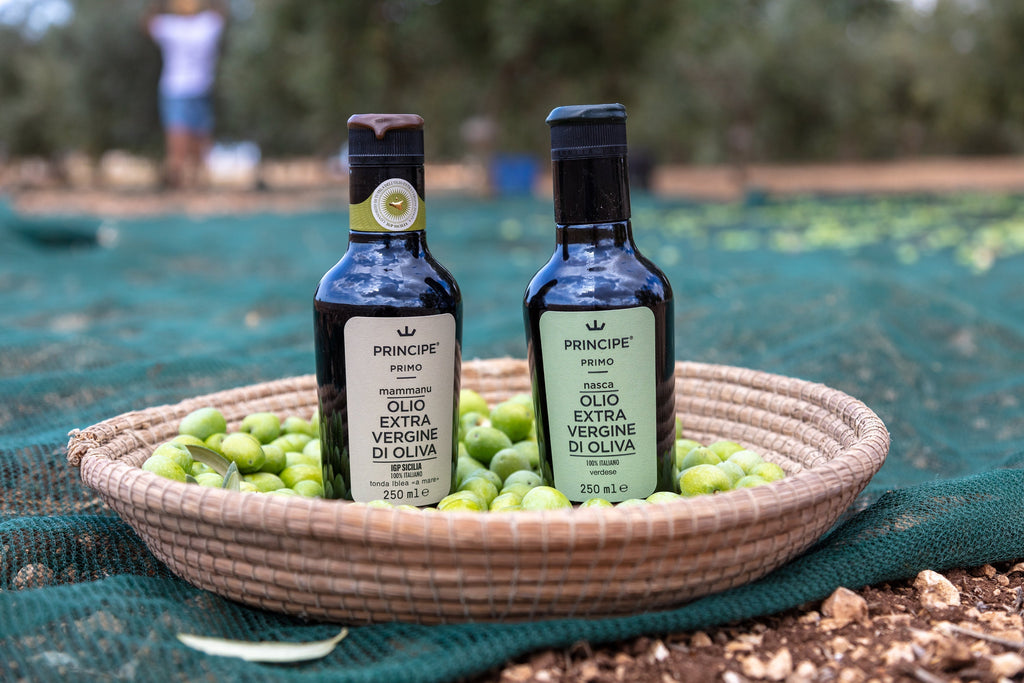
It is also curated by design. Nivitaly does not try to stock every available brand. It selects a focused range from named producers, and its producer pages act as open profiles rather than marketing labels. Alongside Marfuga and Calaforno, its producers include estates across Sicily such as Principe Primo, each named so you can see exactly where a bottle comes from.
For the UAE specifically, Nivitaly evaluates product stability, packaging, and shelf life under proper storage before importing, and stores sensitive products like extra virgin olive oil in controlled conditions once they arrive. Delivery covers the UAE, with a strong focus on Abu Dhabi and Dubai, and free delivery on orders above AED 150.

How to Choose Your First Bottle
If you are buying authentic Italian EVOO for the first time, a simple approach works well.
- Decide how you will use it. A robust, peppery oil suits finishing and dipping, while a milder one suits everyday cooking. Nivitaly's guides on the best olive oil for cooking and the best olive oil for salads help you match oil to use.
- Start with a named producer. Browse Nivitaly's extra virgin olive oil collection and pick a bottle where the producer, region, and olive variety are all stated.
- Buy a size you will finish. Olive oil is best fresh. A 250 ml or 500 ml bottle you use within a few months beats a large tin that sits open for a year, unless you cook with it often.
- Store it properly. Keep it away from heat and light once it arrives, which matters more in the UAE than almost anywhere.
Frequently Asked Questions
Where can I buy authentic Italian extra virgin olive oil in the UAE?
You can buy authentic Italian EVOO from Nivitaly, an Abu Dhabi based importer that sources directly from named Italian producers and delivers across the UAE, including Abu Dhabi and Dubai. Buying from a direct, transparent importer reduces the risk of adulterated or mislabelled oil.
How do I know if olive oil is really extra virgin?
As a buyer, look for a named producer and specific region of origin, since vague terms like "packed in Italy" or "Mediterranean blend" often conceal where the olives were actually grown and pressed. Also check for a harvest date within the last 12 to 18 months, the olive variety stated on the label, and dark glass or tin packaging. The extra virgin grade is verified through laboratory acidity testing and a trained sensory panel under International Olive Council standards, which is why buying from a transparent, traceable source matters more than trusting the label alone.
Why is olive oil so commonly faked?
Real extra virgin olive oil is expensive to produce, so there is a financial incentive to blend it with cheaper oils, mislabel lower grades as extra virgin, or misrepresent origin. It is one of the most adulterated foods globally, which is why buying from a transparent, traceable source matters.
Does the UAE climate affect olive oil quality?
Yes. Heat and light speed up the breakdown of olive oil, raising acidity and dulling flavour over time. This makes proper storage before and after delivery more important in the UAE than in cooler climates.
What is the difference between extra virgin and pure olive oil?
Extra virgin olive oil is produced through mechanical cold extraction with no refining, no heat, and no chemicals, and must pass strict acidity and sensory tests under International Olive Council standards. "Pure" or "light" olive oil is refined, meaning lower grade oil is industrially processed to remove defects, then blended with a small amount of virgin oil to restore colour and flavour. The grade on the label tells you far more than words like pure or light, which have no standardised meaning.
If you want olive oil you can actually trace back to a named Italian producer, browse Nivitaly's extra virgin olive oil range, available for delivery across the UAE.